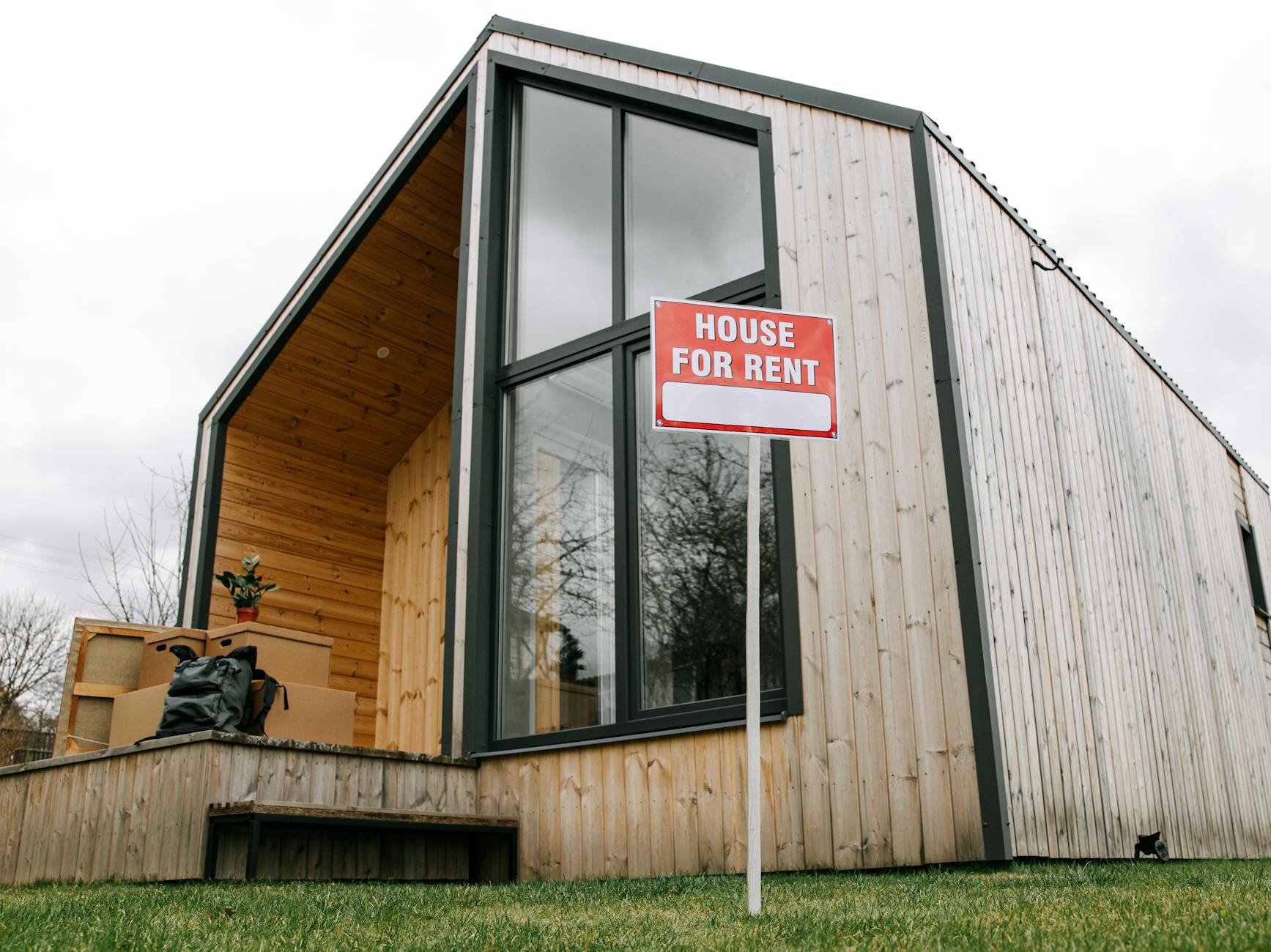
Why Airbnb Investors Keep Running Into Walls With Conventional Lenders
You found a property in Lakeway. The numbers look great on paper. The Airbnb data from comparable listings shows strong occupancy and solid nightly rates. But you walk into a conventional lender and they want two years of W-2s, a personal debt-to-income ratio that doesn't account for any of that rental income, and a loan structure that feels like it was designed for someone buying a single-family home in the suburbs to live in.
That's because it was.
Conventional loans follow Fannie Mae and Freddie Mac guidelines. Those guidelines are built around long-term rental income, and even then, they're conservative about how much of it they'll count. Short-term rental income from Airbnb or VRBO? They either ignore it or require years of documented history to even consider it. For most Airbnb investors, that's a dead end.
DSCR loans work differently. And if you're building a short-term rental portfolio in a market like Austin, Cedar Park, or anywhere in the Hill Country, understanding how DSCR lenders actually evaluate Airbnb properties can be the difference between getting the deal done and watching someone else buy it.
What DSCR Actually Means for a Short-Term Rental
DSCR stands for Debt Service Coverage Ratio. The basic math is simple:
Gross Rental Income / Total Monthly Debt Obligation = DSCR
If your property brings in $4,500 a month in rent and your total mortgage payment (principal, interest, taxes, insurance, and HOA if applicable) is $3,500, your DSCR is 1.28. Most DSCR lenders want to see that number at 1.0 or higher. Some will go below 1.0 with compensating factors, but you'll pay for it in rate or down payment.
For a long-term rental, lenders typically use a market rent appraisal (Form 1007) to establish that income number. It's clean. The appraiser walks the property, compares it to similar rentals in the area, and gives you a monthly rent figure. Done.
For an Airbnb, that process gets messier. And that's where a lot of investors get stuck.
How Lenders Establish Income on an Airbnb Property
This is the core issue, and it varies by lender. There is no single industry standard for how DSCR lenders handle short-term rental income. Here's what you'll generally see:
Option 1: AirDNA Market Data
Some DSCR lenders will accept an AirDNA report to establish projected income. AirDNA is a third-party data platform that tracks short-term rental performance across markets. A lender using this approach will look at comparable active listings in the same zip code or market area, pull occupancy rates and average daily rates, and use that to project an annualized income figure.
This is the most investor-friendly option because you don't need to have owned the property for years or have any rental history at all. It works particularly well for properties in proven Airbnb markets like Lakeway, Marble Falls, or South Congress-adjacent neighborhoods in Austin.
Not every lender accepts AirDNA. Ask explicitly before you go deep on a deal.
Option 2: Existing Operating History
If you're refinancing a property you already operate as an Airbnb, or if the seller has documented history, some lenders will use 12 to 24 months of actual revenue. This usually comes from the Airbnb host dashboard export or bank statements showing deposit history.
The lender will typically average that income over the period and apply a vacancy or expense factor to arrive at the number they'll use for DSCR calculation. The upside is that real history is real data. The downside is that seasonal markets can skew averages and a lender using a simple mean might underestimate your property's actual earning potential.
Option 3: Long-Term Rent Appraisal (Form 1007)
Some DSCR lenders, especially more conservative ones, will still order a standard rent schedule appraisal and use that long-term rent figure even if your intent is to operate the property as an Airbnb.
This is the worst-case scenario for most short-term rental investors. A property in Lakeway that pulls $6,000 a month on Airbnb might only appraise for $2,800 a month in long-term rent. That tanks your DSCR and can kill the deal entirely, or force you into a higher down payment to make the ratio work.
Know which method your lender uses before you submit an application.
What Else DSCR Lenders Look at for Airbnb Deals
The income question is the big one, but it's not the only variable. Here's what else comes into play:
Property Type and Zoning
This matters more for short-term rentals than almost any other loan type. Some lenders will not finance properties in HOA communities that prohibit short-term rentals. Some will not finance properties in municipalities with STR licensing restrictions that create income uncertainty.
Austin, Travis County, and surrounding areas like Wimberley and Dripping Springs all have different local regulations around short-term rentals. Some neighborhoods inside Austin city limits require owner-occupancy for STR permits. Lakeway and unincorporated Hays County have different rules. A lender financing a short-term rental in Travis County is taking on regulatory risk, and some of them price for it or exclude it entirely.
Before you go under contract on an Airbnb property, verify local STR ordinances. This isn't just a financing issue. It's a business viability issue.
Loan-to-Value and Down Payment
DSCR loans for short-term rentals typically require more skin in the game than long-term rental DSCR deals. Where a long-term rental DSCR loan might go up to 80% LTV, many lenders cap short-term rental DSCR loans at 70% to 75% LTV. That means you're looking at 25% to 30% down on the purchase, or needing 25% to 30% equity to do a cash-out refinance.
This is not universal. Some lenders are more aggressive. But budget for it.
Credit Score
DSCR loans are no-income-verification on the personal side. Your W-2s and tax returns don't drive the decision. But your credit score absolutely does. Most DSCR lenders want a 680 minimum. The best pricing typically starts at 740 and above. If your score is in the 660s, you can still find lenders willing to work with you, but your rate and reserve requirements will reflect the additional risk.
Reserves
For short-term rentals specifically, lenders often require 6 to 12 months of PITIA (principal, interest, taxes, insurance, and association dues) in reserves after closing. This is because short-term rental income is less predictable than a signed 12-month lease. Lenders want to know you can cover debt service if occupancy drops.
If you're using a scenario builder to model a potential Airbnb acquisition, factor in your reserve requirement. It affects how much capital you actually need at closing, not just your down payment.
The DSCR Ratio That Actually Gets You a Competitive Rate
Here's the practical reality. Most DSCR lenders have tiered pricing based on your DSCR ratio:
- Below 1.0: Some lenders will still do the deal, but expect a rate premium and possibly a higher down payment requirement.
- 1.0 to 1.19: Approvable at most lenders, but still on the thin side. This is where reserve requirements tend to be more aggressive.
- 1.20 and above: This is the sweet spot. Your pricing improves and lenders have more flexibility on other variables.
- 1.35 and above: You have real leverage. Some lenders will offer better LTV, lower rates, and lighter reserve requirements.
When you're evaluating an Airbnb property, back into this math before you make an offer. If the numbers only work at a 1.05 DSCR using optimistic AirDNA projections, you're operating with almost no margin. A rate increase, a soft tourism quarter, or a regulatory change in your market could flip that property cash-flow negative fast.
If you want to run different scenarios side by side before committing, the loan comparison tool can help you see how rate changes and income assumptions affect your actual monthly position.
How to Position Your Airbnb Deal for DSCR Approval
A few things that move the needle when you're trying to get a short-term rental DSCR deal across the finish line:
- Choose a lender that explicitly accepts AirDNA data before you go under contract.
- Pull your own AirDNA report for the market before you make an offer so you know what income projection a lender is likely to use.
- Get your credit score above 740 if at all possible. The pricing difference between 720 and 750 is real money over a 30-year note.
- Document any existing STR operating history clearly. Clean bank statements and a Airbnb host earnings export make an underwriter's job easier.
- Budget for 25% to 30% down and 6 months of reserves as a baseline. If you can do better, great. But don't model the deal assuming best-case capital requirements.
The investors I see succeed with Airbnb financing aren't the ones chasing the highest nightly rate. They're the ones who run conservative income projections and still like what they see.
One More Thing Worth Saying
DSCR loans for Airbnb properties are not a niche product anymore. They exist, they work, and the right lender can get you closed on a short-term rental without a single pay stub. But the product has more nuance than a standard long-term rental DSCR loan. Lender selection matters. Income methodology matters. Local STR regulations matter.
If you're serious about building a short-term rental portfolio in the Austin metro or anywhere in Texas, work with someone who has done these deals before and knows which lenders actually deliver on Airbnb financing versus which ones claim to and then struggle at underwriting.
That's exactly the kind of deal I work through regularly.
Want to walk through your numbers? Talk to Austen.
Austen Smith NMLS #265697. Barton Creek Lending Group NMLS #264320. This post is for educational purposes only and does not constitute a commitment to lend or a guarantee of any specific rate or loan terms.
Got a real-world question?
Articles are great. A 15-minute call with a real human is better. We'll walk through your actual numbers, options, and timing.
Talk to Austen →